Outsourcing commercial cleaning can look simple on paper until you have to live with the results. The wrong provider creates hidden risk through a vague understanding of your business, inconsistent standards, and poor proof of work.
The right provider keeps your facility safe, compliant, and presentable without you having to chase the basics. This matters in food production, where cleaning is part of your risk-control system. Ultimately, cleaning determines whether your business thrives.
Key takeaways
Ensure you know what you’re signing up for when engaging a commercial cleaning company. Prioritise scope, verification time, and clear escalation-to-closure. You want verifiable proof that they will deliver promised outcomes.
What “good” looks like in a food-grade commercial cleaning partner
Demonstrable experience in food production environments
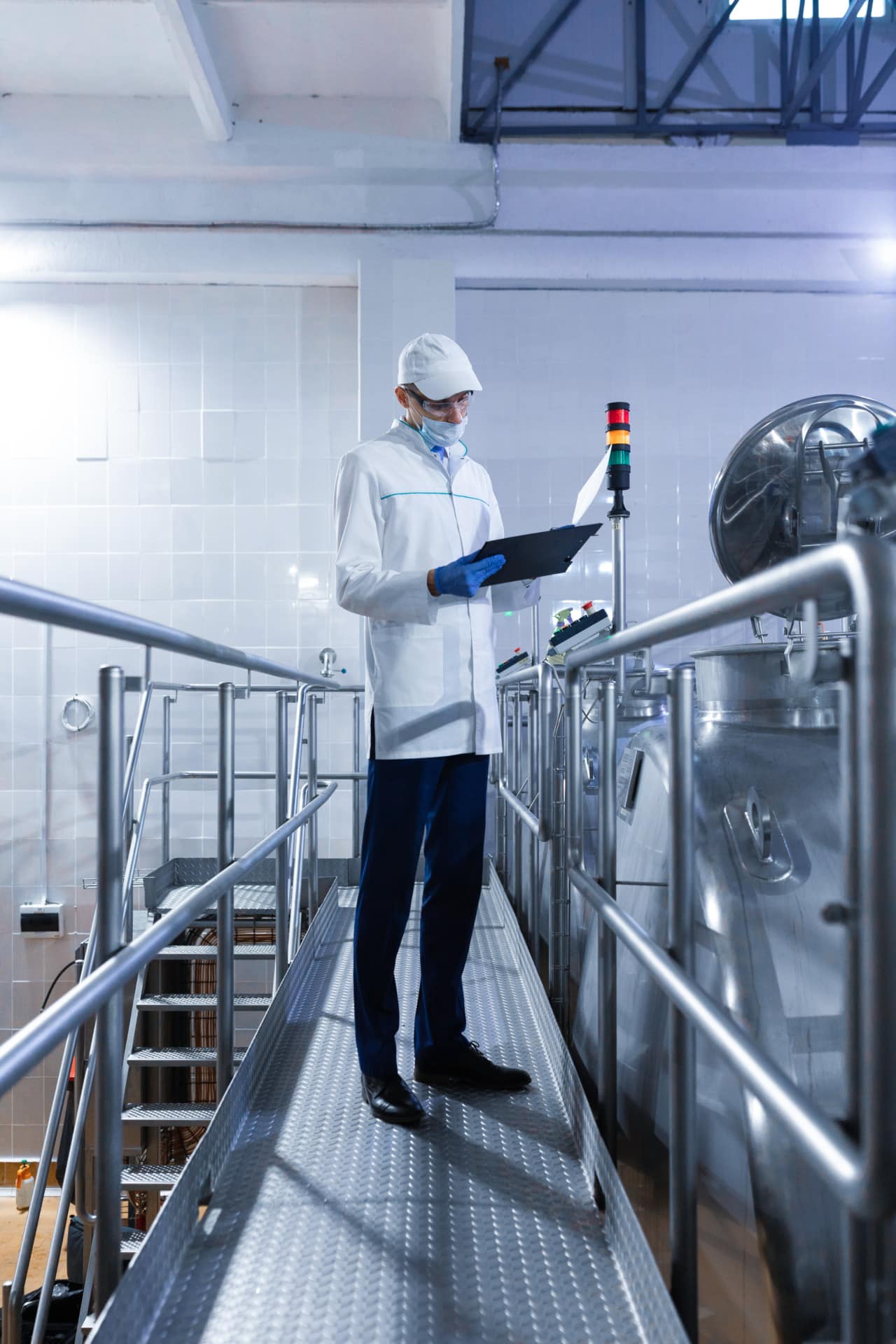
In the food production industry, cleaning is not standard. Some environments require wet plant cleaning; others require dry plant cleaning. For some production plants, you can’t afford to shut them down for cleaning.
A good commercial cleaning provider should be able to adapt to your needs and offer specific cleaning programmes for your business. Look for teams that can demonstrate site-specific sanitation capability supported by documented verification and corrective action processes.
Clear scope ownership
A strong commercial cleaning company defines responsibilities by zone, task, and frequency. In the end, you want verifiable proof that your facility is cleaned according to relevant standards.
Things to look for are: who signs off on each clean, who clarifies where production ends and where cleaning begins. If there is a gap, is it written down and controlled, or “sorted out on the floor?”
Evidence-led delivery
A credible cleaning partner will leave a clear paper trail (or digital trail). You want to verify whether the company uses documented checklists, verification checks, and a non-conformance process that shows exactly what was found, what was fixed, who took ownership, and when it was signed off.
When something goes wrong, you want to know there are protocols and procedures for mitigation. Escalation should not depend on who is on shift; it should be structured, fast, and traceable all the way through to closure.
Standards used
A food-grade cleaning partner should be fluent in the same standards your site is audited against. They should understand what auditors are actually looking for. Ask which frameworks they work with. That could be HACCP or other relevant standards.
Push a level deeper with your questioning: ask how those standards shape their cleaning plan, what records they keep, how they verify results, and how they train teams to follow the same method every shift.
Previous clients
When it comes to references, ask for examples that match your risk profile, including similar product types, allergens, hygiene zoning, shift patterns, and audit schemes. The strongest providers can point to comparable sites and explain exactly what they delivered.
BBBEE
BBBEE is a must in the South African operating environment. Ask for a current certificate or affidavit up front, clarify whether any part of the work will be subcontracted, and ensure the contract is in order. Ultimately, you want clear compliance and a clear understanding of who is responsible for delivery.
Use modern tech like I-Clean
Modern tech can make hygiene compliance much easier. You want it to provide real functions, such as supporting inspections, trend reporting, issuing tickets, providing evidence, and audit information, so governance is easier, and performance is visible.
I-Clean can help standardise inspections, log issues as tickets, attach photo evidence, and track corrective actions through to sign-off. However, the real value is audit readiness: your cleaning records, trends, and closure evidence are easier to compile, making performance harder to hide and easier to improve.
Reputation
Reputation in food manufacturing is operational reliability. Ask about staff turnover, supervisor stability, absence cover, response times, and how they handle repeat defects. You are buying consistency under pressure, not a good first impression.
Industry specialisation
Food-grade cleaning is a risk-control function. Offices and traditional cleaning environments require a very different skill set from the food production industry.
Specialists understand that hygiene zoning is non-negotiable, and they design cleaning around preventing recontamination at the real pinch points, like doorways, drains, tools, wheels, and shift changeovers.
They can explain how low- and high-care areas are protected, and how movement, equipment, and methods are controlled to prevent risk from spreading.
Small vs large commercial cleaning companies
Here, understanding exactly what your business needs from a commercial cleaning company is important. A large provider may offer built-in coverage, established systems, and structured training programmes. Smaller specialists can provide closer ownership and faster decisions. Either model can work, as long as you document your needs from the company.
The 12 questions to ask before you sign
- How do you scope the site and build a cleaning plan?
- How do you prevent recontamination between areas and shifts?
- What does supervision look like on-site?
- How is performance measured?
- What’s your escalation pathway for findings?
- How do you handle peak production, shutdowns, and emergency response?
- How do you train and retain staff assigned to my site?
- How do you manage safety, access control, and permit systems?
- How do you align with audits (what evidence do you provide)?
- What do transitions and onboarding look like?
- What does a typical failure look like, and how do you prevent recurrence?
- What references can you provide in similar risk profiles?
What to lock down in a commercial cleaning company contract and SLA
Clear deliverables
Spell out exactly what gets cleaned, where, and how often. Break that down further by production zone and surface type. Workloads can change, but process and transparency keep your facility cleaning even when they do.
Relevant standards when looking at commercial cleaning deliverables
ISO/TS 22002-1 outlines baseline hygiene and operational controls a factory should have in place to support the standard. It notes that cleaning and sanitising should be managed as a documented programme, not an informal “clean-as-you-go” activity.
The standard requires the commercial cleaning company to define, at a minimum, what is cleaned or sanitised, who is responsible, the method and frequency, and how they will monitor and verify completion, including post-clean and pre-start-up checks, to ensure hygiene control is consistent across shifts and routines.
Response times and corrective action deadlines
Define how quickly issues must be acknowledged, rectified, and verified as closed, based on severity. Without deadlines, many companies take shortcuts, leading to defects that eventually show up in audits or product risks.
Relevant standards when looking at commercial cleaning response times
According to ISO 22000:2018, when a nonconformity occurs, the commercial cleaning company is expected to act immediately to control and correct the issue, manage any consequences and identify the root cause. Subsequently, they must implement corrective actions to prevent recurrence, then review whether the corrective actions were effective and update the food safety management system as needed.
Reporting cadence and governance meeting rhythm
Be clear on the operational rhythm. You want regular operational reporting for issues, actions, and trends, plus monthly governance meetings to review performance. Consistent reporting keeps accountability visible.
Relevant standards when looking at commercial cleaning reporting cadence
A standard that outlines this is ISO 41012:2017. It states that sourcing in facility management should be treated as a structured process that goes beyond picking a supplier on price. It sets out the essential elements of FM sourcing so expectations, accountability, and service delivery are governed properly from a strategic level through to day-to-day operations.
Change control process for scope creep and seasonal demands
Build a formal process for adding workload or frequency changes. In that way, seasonal peaks are documented and expected. It also helps keep pricing and workload aligned, so you don’t pay for work that doesn’t exist, just because you have it scheduled on your end.
Red flags from a commercial cleaning company
Vague scope
A vague scope is where food-grade cleaning partnerships go wrong, fast. If the deliverables are not defined, standards become subjective. You don’t want to debate whether items are cleaned; you want documented outcomes. “We’ll sort it out on site” often creates gaps between production and cleaning responsibilities, and those gaps are exactly where hygiene risk lives.
No governance
A lack of governance can also exacerbate the problem. Without a set reporting rhythm, issues get handled inconsistently depending on who is on shift. You might have a strong first month, then a slow decline as shortcuts creep in and supervisors change.
No site-specific plan
If a provider cannot produce a site-specific cleaning plan, you are buying a generic cleaning plan that may not deliver results when it comes time for an audit. Food plants have unique risks by line, zone, product type, allergens, traffic flow, and shift pattern, so a templated checklist will always miss critical details.
Pricing that ignores complexity
If the price looks too simple for a complex food environment, it usually is. When a quote does not reflect your actual business needs, it often means the supplier has under-scoped the work or plans to “make it work” by cutting time, labour, supervision, or verification.
Miscommunication of what is needed from a commercial cleaning service
It’s often difficult for businesses that don’t fully understand their cleaning needs to determine what they should expect from a commercial cleaning company. A lower price may seem attractive, but it can lead to costly contamination if you fail a food safety audit.
Cheap contracts can quickly become expensive. Underpriced cleaning typically shows up as missed tasks, rushed changeovers, inconsistent standards between shifts, and poor documentation. The first red flag is usually high staff turnover or a lack of on-site supervision, followed by repeat defects that never truly close out.
Conclusion
Choosing a food-grade commercial cleaning partner is not about who promises the shiniest result; it is about who can deliver consistent control under real production pressure.
The right provider will understand what type of cleaning your food plant needs, protect against recontamination, and work confidently across shifts and shutdowns. They’ll back every claim with records and verification. From your end, you will have to look out for red flags and know exactly what your business needs from a commercial cleaning company.
If you’re ready for the next step, get in touch with Advanced Cleaning Services.